
Moe Cason Knives: The Complete Guide to Route 83 BBQ Knives
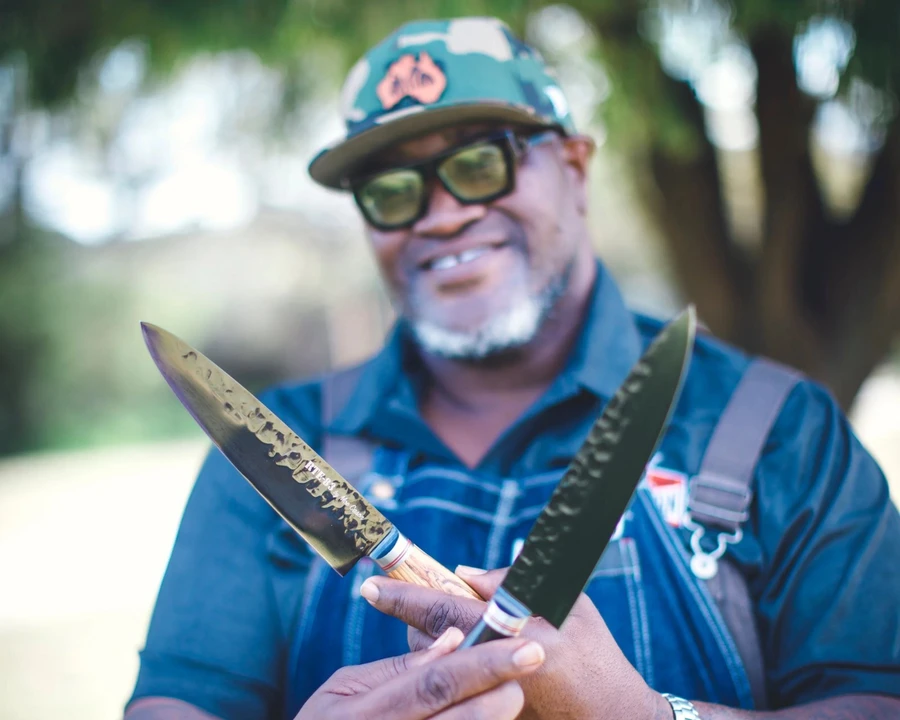
Walk up to any serious barbecue setup and you'll rarely find just one knife. There's a narrow blade for trimming, a bigger blade for chopping and carving, something heavy for bone, and usually a small knife that never leaves the cook's side. Each one does a job the others do poorly.
The Moe Cason knife collection from Route 83 is built around that idea, with one twist: every knife has an oversized handle made for cooks with big hands. Below you'll find who Moe Cason is, why he designed these knives, what each one is made of, and which one fits the work you actually do. Every spec comes straight from our product pages.
Who Is Moe Cason?

Marlando "Big Moe" Cason is a self-taught pitmaster from Des Moines, Iowa. He grew up around family cookouts where somebody was usually running the 55-gallon smoker in the backyard, and he learned from recipes passed down by his grandmother, Margaret Cason.
He started competing in 2006 under the Ponderosa BBQ name and has since cooked in hundreds of contests across 35 states. His own site counts roughly 260; Route 83 puts the number past 300. Along the way:
- Multiple Grand Championships and Reserve Grand Championships
- Three perfect 180 scores, in chicken, ribs and pork shoulder
- Second place in sauce at the 2012 Jack Daniel's World Championship Invitational
Most barbecue fans know him from TV. He competed on BBQ Pitmasters, appeared on BBQ Pit Wars, and has also judged. He started Ponderosa Barbecue in Des Moines and has his own line of barbecue sauce.
Why Moe Cason Created Route 83 Knives
Route 83 Knives has roots in the prairies of central Canada, and takes its name from U.S. Route 83 — the highway that starts in Manitoba and runs south through Kansas and Texas to the Mexican border, through some of the best barbecue country in North America. The company builds its knives one at a time, with hand-hammered blades and natural wood handles, in two main lines: the Classic Range in German steel and the Signature Range in Damascus steel.
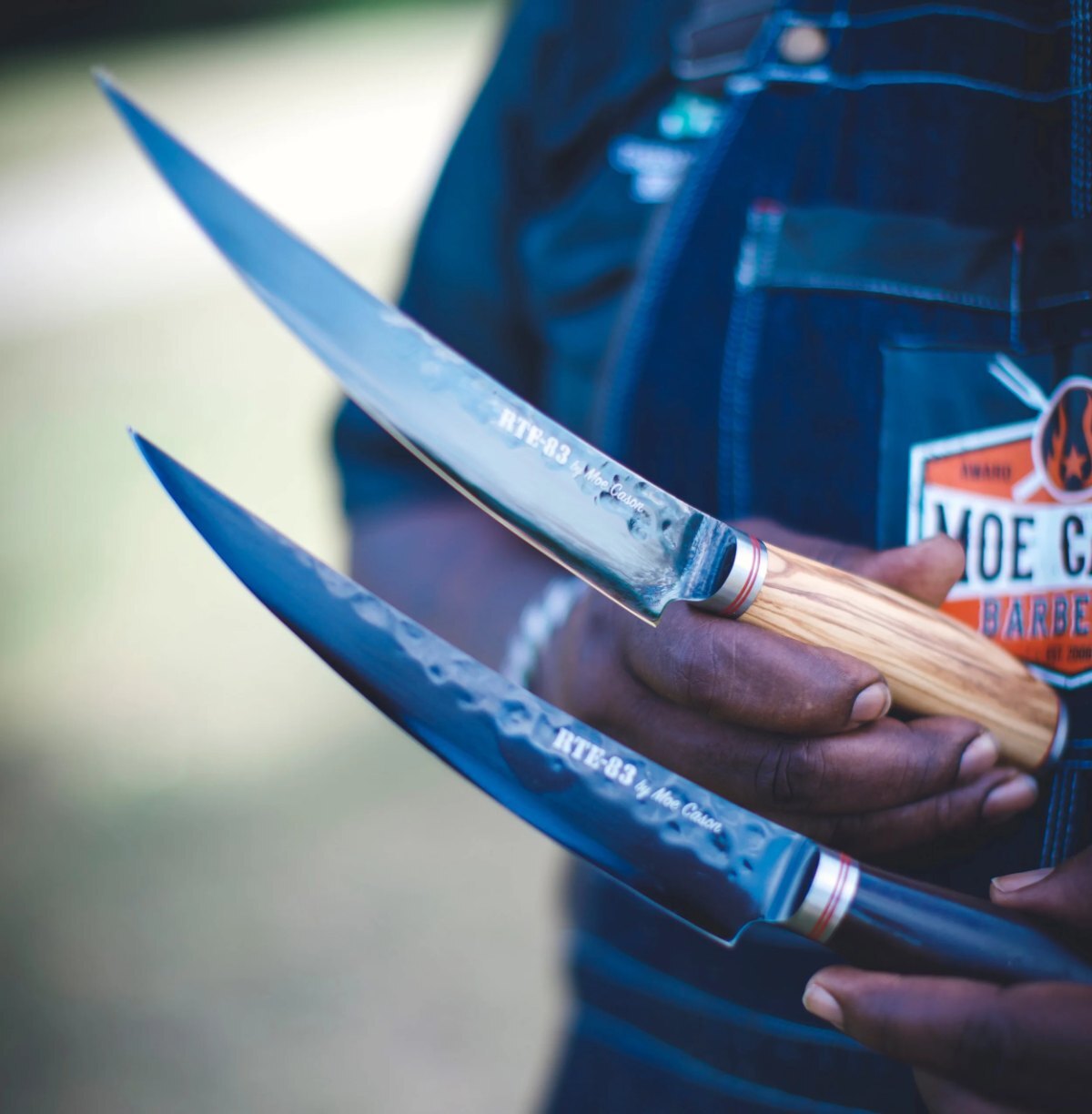
Moe became a Route 83 ambassador, and that partnership turned into his own collection. The reason, according to Route 83, was straightforward: after years of using knives that didn't fit his grip, he wanted blades built for barbecue and for larger hands. The knives he tested and approved have handles at least 15% wider than any other Route 83 series, and most carry a gloss-black titanium finish.
That extra width earns its keep on a long trim. Your hands get greasy, and a thin handle makes you squeeze harder to keep control — a fuller handle spreads that pressure across your palm instead.
Moe Cason / Route 83 Knives Available at NTX BBQ Supply
Here's the full Moe Cason lineup we carry, with the specs we list for each knife. You can also browse them on our Moe Cason page or see the wider Route 83 collection.
Moe Cason XL Boning / Trimming Knife
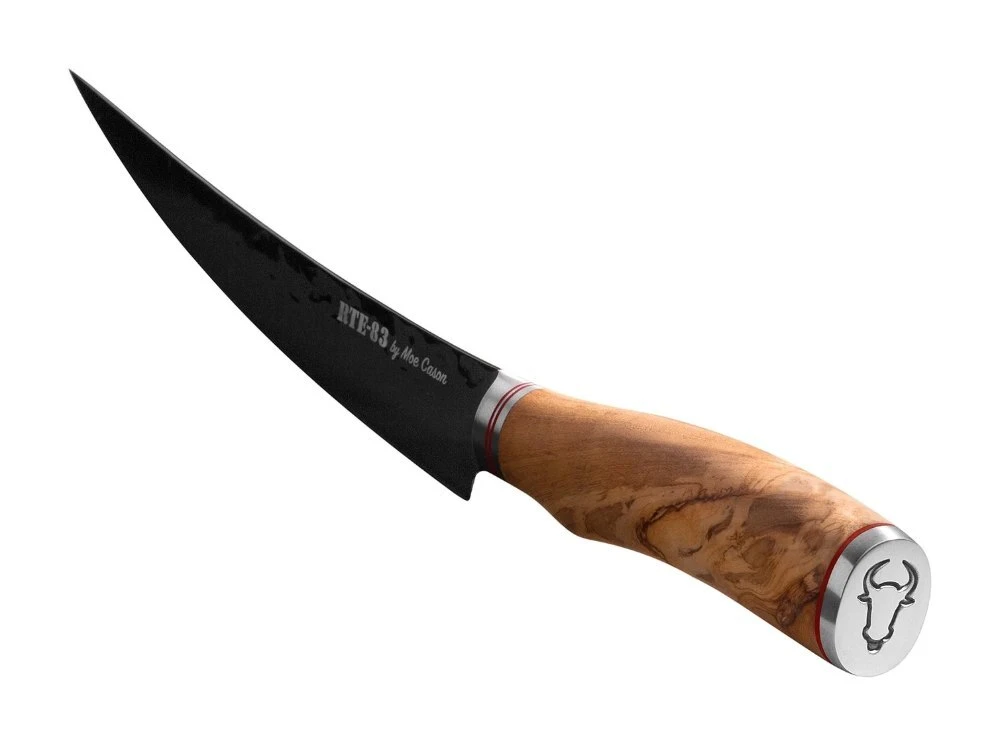
Price: $180 | Handles: Italian Olive Wood or Natural Ebony
If you only buy one knife for brisket, look at this one first. The XL Boning / Trimming Knife has a narrow, curved blade that follows the shape of the meat, so you can peel off a fat cap or work under silverskin without digging into the flat. The titanium coating helps it slide between tough skin and meat instead of dragging.
- Steel: Titanium-plated German 1.4116 stainless steel, stain resistant
- Hardness: 58 ±1 on the Rockwell scale
- Blade length: 8½" (21 cm)
- Overall length: 13¾" (35 cm)
- Weight: 7 oz (200 g)
- Handle: Hand-shaped natural wood with stainless steel caps
- Includes: Natural wood storage box
Best for: Trimming brisket, removing silverskin, deboning, breaking down pork butts and general slicing — anyone who trims their own briskets and wants a blade shaped to follow the meat.
Moe Cason XL Chef Knife
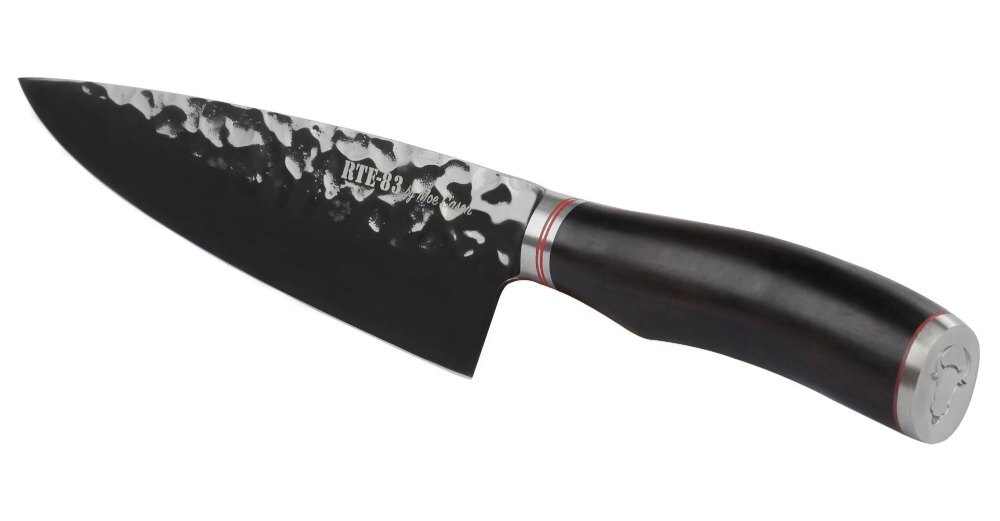
Price: $175 | Handles: Italian Olive Wood or Natural Ebony
The XL Chef Knife handles most of the prep that isn't trimming: chopping onions and peppers, carving a roast, slicing homemade beef jerky. The blade is the same length as the boning knife, but the extra height gives your knuckles clearance on the board and a flat side for scooping up what you just cut.
- Steel: Titanium-plated German 1.4116 stainless steel, stain resistant
- Hardness: 58 ±1 on the Rockwell scale
- Blade length: 8½" (21.6 cm)
- Overall length: 14" (35.5 cm)
- Weight: About 9 oz (260 g)
- Handle: Hand-shaped natural wood with stainless steel caps for counterbalance
- Includes: Natural wood storage box
Best for: Chopping, carving, prepping sides and general cutting at the pit. If you want one knife that covers most of the work, start here.
Moe Cason Meat Cleaver
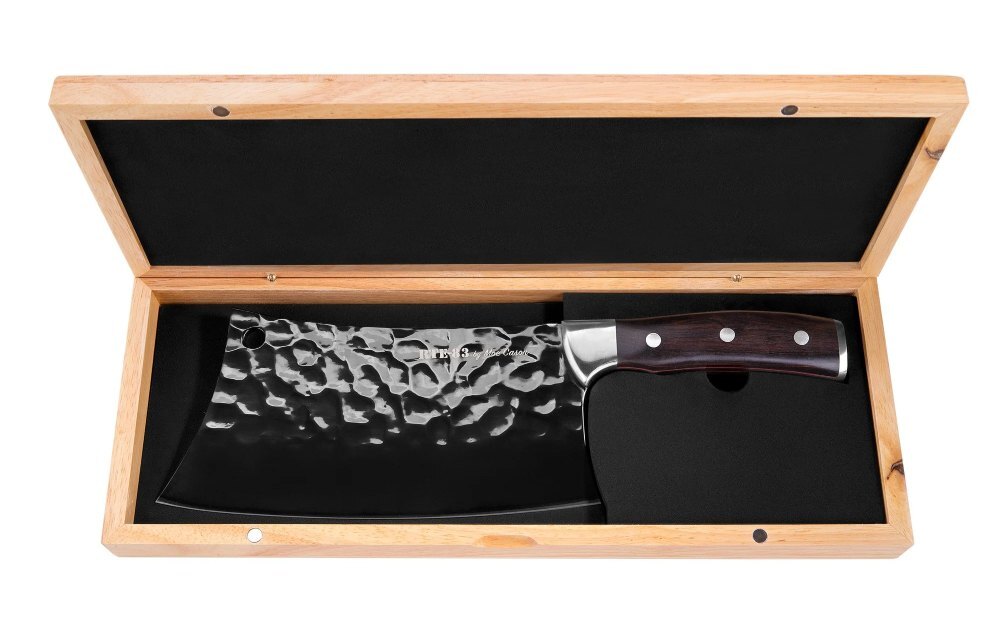
Price: $290 | Handles: Natural Ebony or Italian Olive Wood
The Moe Cason Meat Cleaver is the heaviest knife in the collection by a wide margin — about three pounds, with a spine nearly a third of an inch of solid stainless steel. The blade is hammered slightly thinner at the front than the back for more leverage on heavy cuts, and the edge is ground to 25 degrees, a sturdier angle than a slicing knife needs, so it holds up coming down through joints and bone.
- Steel: Titanium-plated German 1.4116 stainless steel, full tang
- Hardness: 56 ±1 on the Rockwell scale
- Edge angle: 25 degrees
- Blade length: 9" (23 cm)
- Overall length: 13¾" (35 cm)
- Spine thickness: About 1/3" (7 mm)
- Weight: About 3 lb (1,300 g)
- Includes: Natural wood storage box
Best for: Splitting chicken, separating rib sections and other bone-in work where a chef knife could chip. It earns its place if you break down whole birds or large bone-in cuts regularly.
Moe Cason EDC (German Steel)

Price: $150
EDC stands for "everyday carry," and Route 83 describes this one as a mini chef knife. The EDC German Steel is the most affordable way into the collection. Instead of wood, it has a G10 handle — a tough laminate that's waterproof and stays grippy wet, which suits work around coolers, rinse buckets and camp kitchens.
- Steel: German steel with titanium plating
- Construction: Fixed, full-tang blade
- Spine thickness: Listed as 1/8" (4 mm)
- Handle: G10 laminate
Best for: Cutting butcher twine, quick trims at the pit, opening packaging and camp cooking.
Moe Cason EDC (Damascus / VG10)

Price: $225
The EDC Damascus Steel is the same compact knife with a different blade. Its cutting edge is VG10, a hard Japanese stainless steel, wrapped in 33 layers of stainless on each side. The blade is hand hammered and partly titanium plated, so you get the black finish plus the wavy layered pattern Damascus is known for.
- Steel: VG10 Japanese steel core with 33 layers of stainless steel per side
- Finish: Hand hammered, partially titanium plated
- Construction: Fixed, full-tang blade
- Spine thickness: Listed as 1/8" (4 mm)
- Handle: G10 laminate
Best for: The same jobs as the German steel EDC, for someone who wants a harder cutting core and the Damascus look. It's also an easy gift pick.
Moe Cason Skinner with Gut Hook
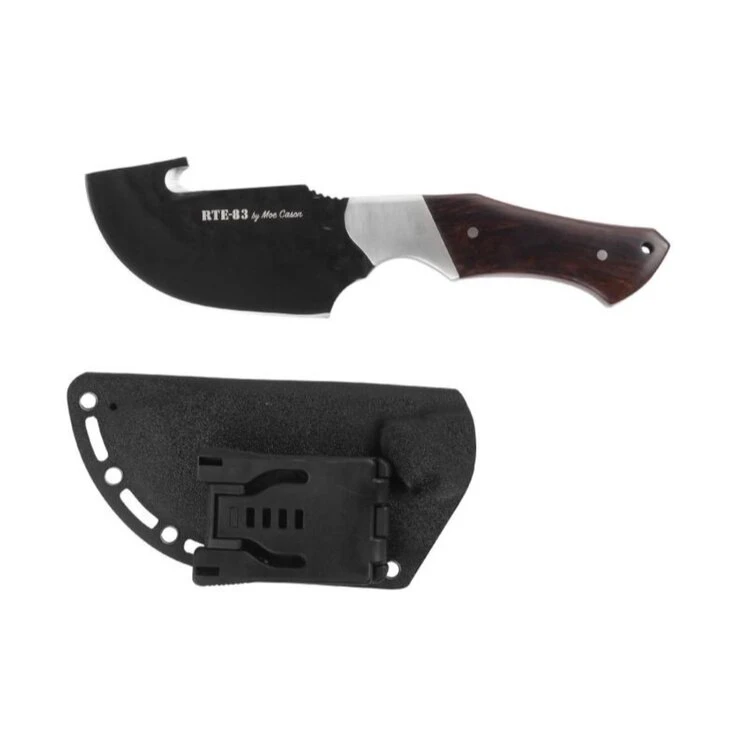
Price: $190 | Handles: Natural Ebony or Italian Olive Wood
The Skinner with Gut Hook is a field knife: a fixed skinning blade with a gut hook on the spine, which opens a hide cleanly without cutting into the meat underneath. If you hunt your own venison for dishes like smoked backstrap, this is the knife for the work you do before the meat reaches the smoker.
- Steel: Titanium-plated German 1.4116 stainless steel, stain resistant
- Hardness: 58 ±1 on the Rockwell scale
- Construction: Fixed, full-tang blade
- Handle: Natural wood, finished only with olive oil and vinegar
- Includes: Kydex sheath with belt clip
- Care: Hand wash only; not dishwasher safe
Best for: Field dressing, skinning and hunting camp.
Which Moe Cason Knife Is Right for You?
The whole collection at a glance:
| Knife | Best for | Blade / style |
|---|---|---|
| XL Boning / Trimming $180 |
Brisket trimming, silverskin | 8½" curved blade, 7 oz |
| XL Chef $175 |
Everyday prep, carving | 8½" wide blade, 9 oz |
| Meat Cleaver $290 |
Bone-in cuts, rib racks | 9" cleaver, about 3 lb |
| EDC $150 German / $225 Damascus |
Compact carry, small jobs | Mini chef knife, G10 |
| Skinner with Gut Hook $190 |
Field dressing, hunting | Gut hook, Kydex sheath |
One gap worth knowing about: the Moe Cason collection doesn't include a long slicer for cooked brisket. For that job, look at the Route 83 Classic Brisket 10" Carving Knife, or the rest of our premium knives and cutlery.
Chef Knife vs. Boning Knife for BBQ
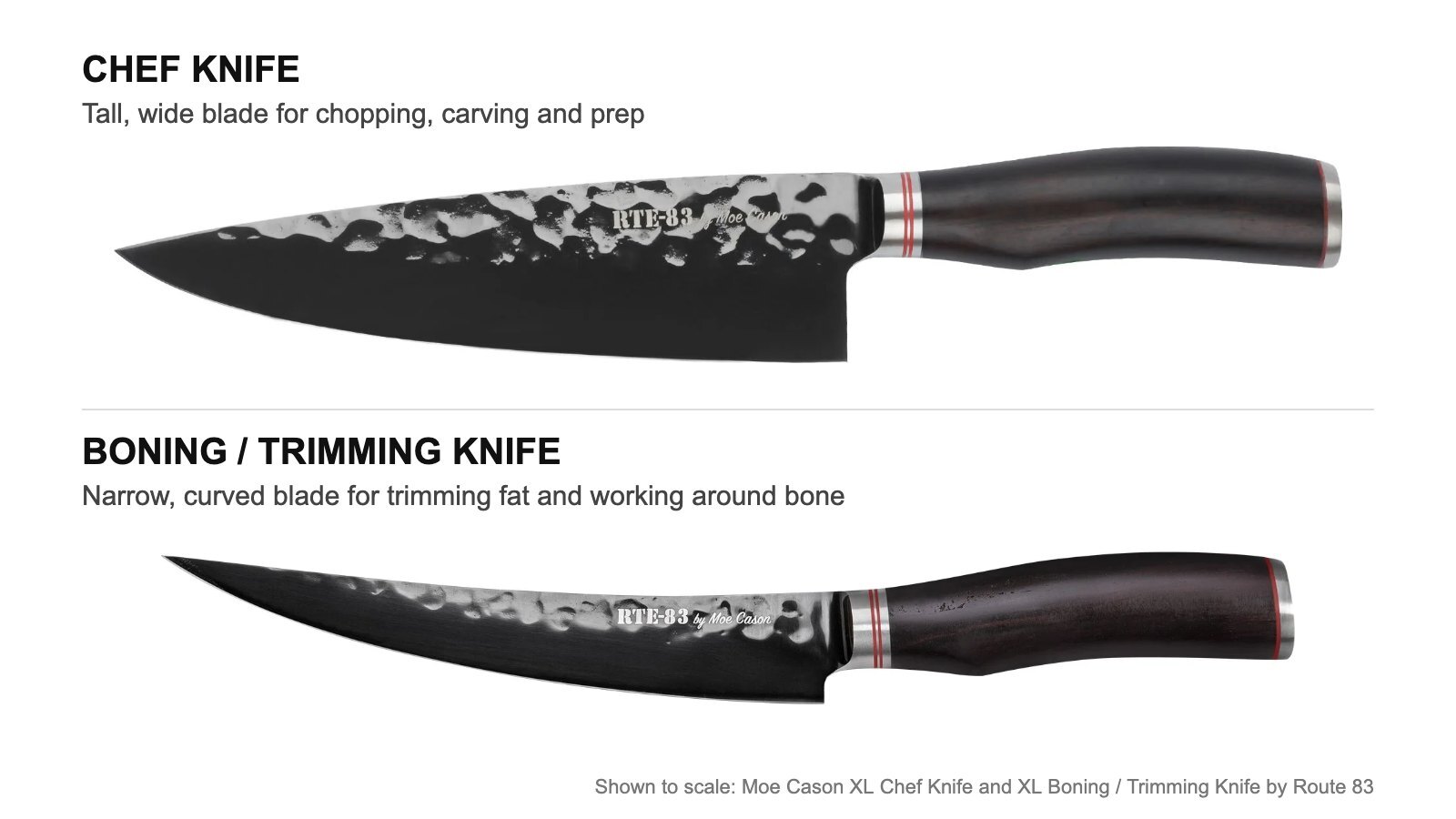
This is one of the most common questions we get at the counter. Both Moe Cason knives have 8½" blades, but they're built for different work.
A boning knife is narrow, usually with a curve toward the tip. Less blade touches the meat, so it's easier to steer around bones and along seams of fat, and the curve lets you slice rather than hack. That's why most pitmasters reach for one to trim brisket, pull silverskin off ribs, and separate muscles on a pork butt.
A chef knife is tall and wide with a gentle curve along the edge. The height keeps your knuckles off the board, the weight pushes through vegetables, and the flat side moves food around. It's the better tool for chopping, mincing, dicing and carving cooked roasts.
The short answer: if most of your time goes into getting meat ready for the smoker, buy the boning knife first. If it goes into sides, sauces and carving, start with the chef knife. Plenty of cooks end up with both.
What Makes a Good Brisket Trimming Knife?
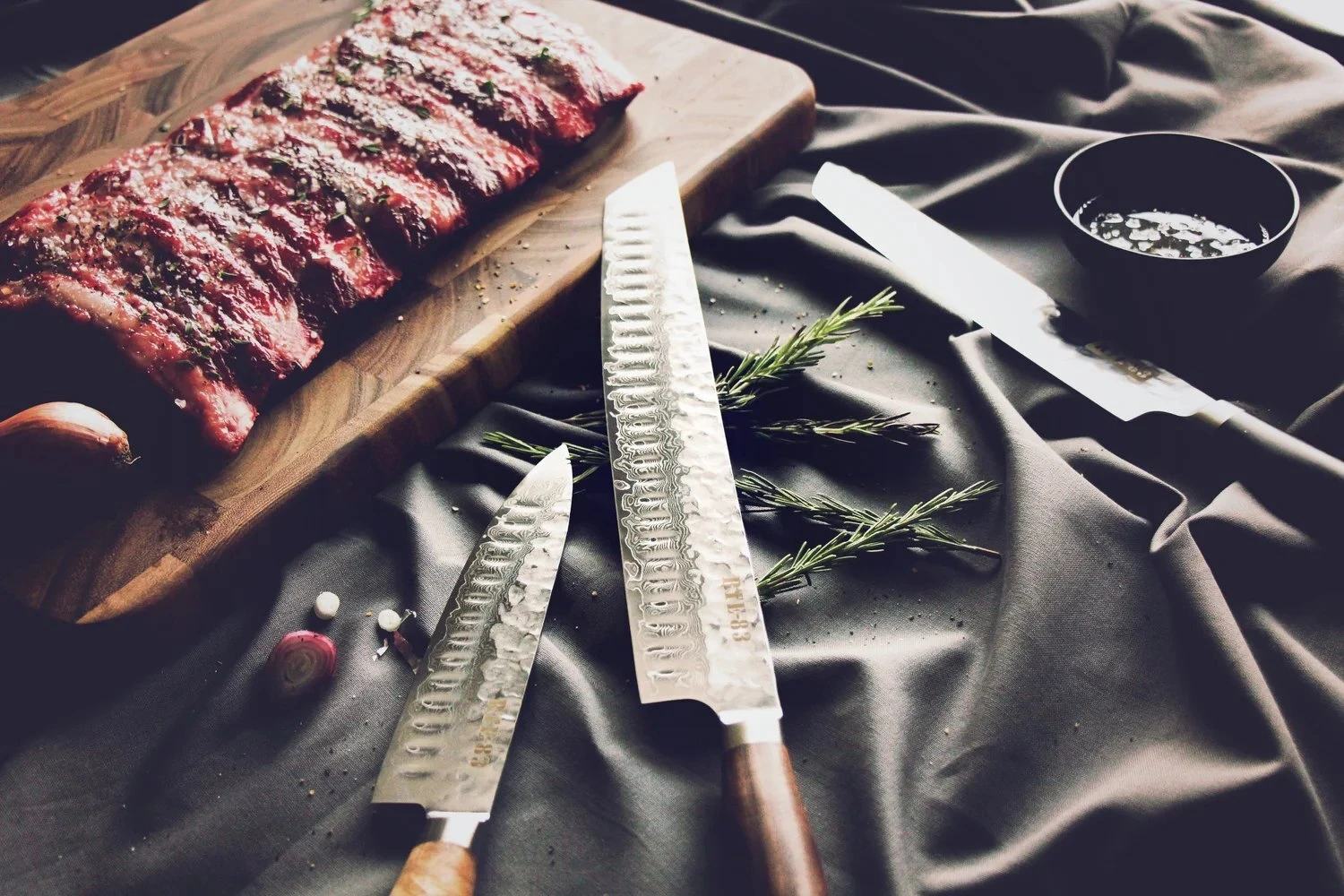
Route 83 knives from the wider collection. The Moe Cason knives share the same construction with a gloss-black titanium finish and a wider handle.
Trimming shapes how a brisket cooks. Thick fat won't render, thin edges burn, and a bad cut on the flat can dry out. Six things separate a knife that helps from one that fights you.
A narrow, curved blade
A slim blade follows the curve of the deckle and the edges of the flat, and a slight upward curve lets you shave fat off in long strokes instead of sawing.
Enough length
A whole packer is big. A blade around 6 to 8 inches takes long, even passes across the fat cap, which leaves a smoother surface for bark to form.
A sharp edge that stays sharp
Cold brisket fat is waxy and slippery — a dull knife slides off it and into the meat, which is how most trimming mistakes happen. Steel in the high 50s on the Rockwell scale balances edge retention against easy sharpening.
A surface that doesn't stick
Fat builds up on a blade fast, and a coated or hammered finish helps it release.
A handle you can hold with greasy hands
This is where most knives fall short. A thin handle makes you grip harder, and a tight grip means less control and tired hands by the end of a trim. A pair of BBQ gloves helps too.
Good balance
A knife that's heavy toward the tip wears out your wrist. The stainless steel caps at the back of the Moe Cason handles work as a counterweight to even out the weight from tip to end.
Route 83 Knife Materials Explained
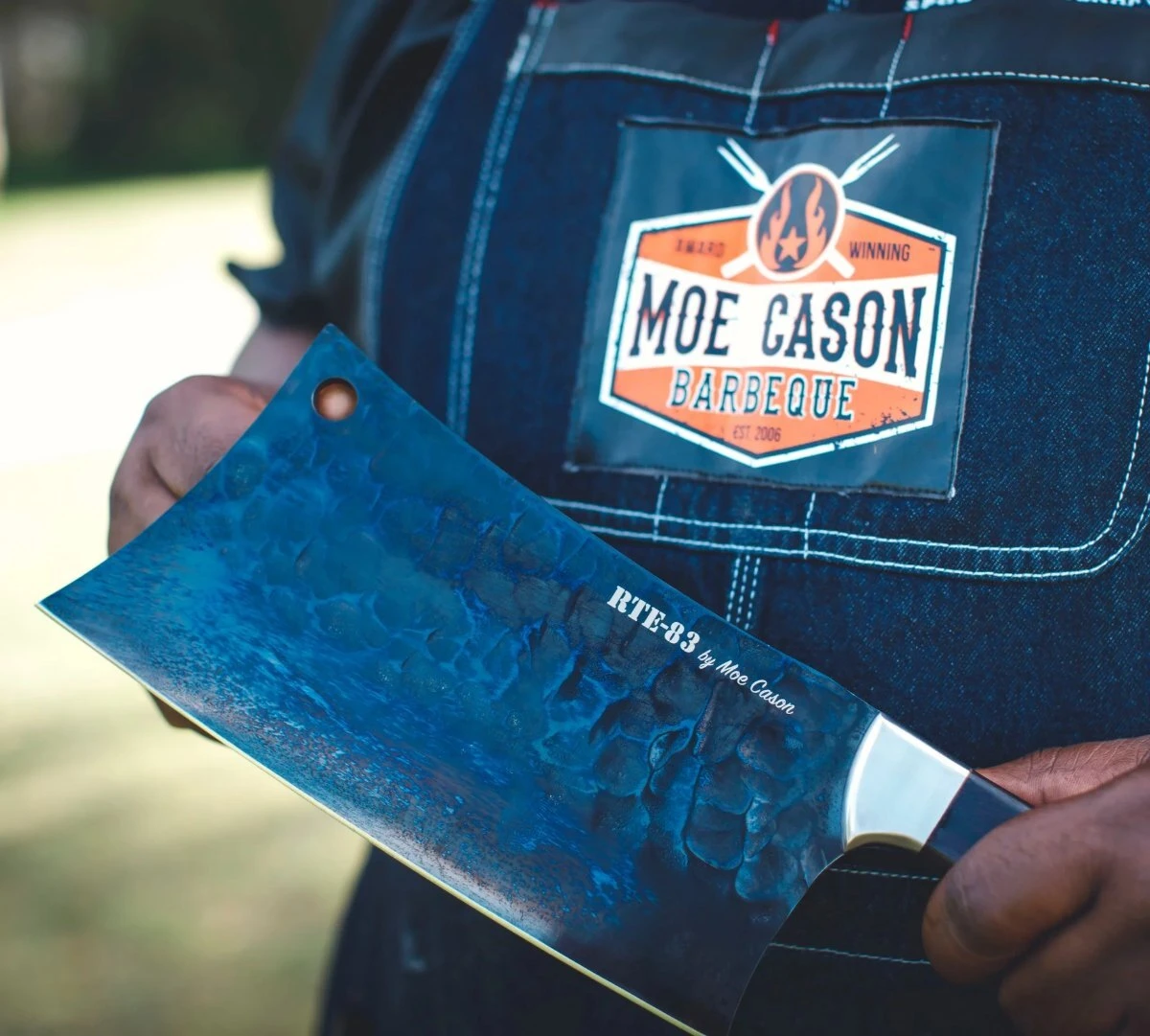
Knife listings are full of shorthand. Here's what the terms in this collection mean.
German steel (1.4116)
1.4116 is a stainless steel widely used in German kitchen knives: stain and corrosion resistant, holds an edge well, and easy enough to sharpen at home. Most of the Moe Cason collection uses it, and Route 83 calls German steel "highly durable" across its Classic Range.
Rockwell hardness (the "58 ±1" number)
The Rockwell scale measures how hard the steel is. Higher means the edge lasts longer but chips more easily; lower means tougher steel. The boning, chef and skinner knives sit around 58. The cleaver is 56 on purpose — a knife that chops through bone needs toughness more than a fine edge, a point Route 83 makes by comparing its cleaver to an axe.
VG10 Japanese steel and Damascus
VG10 is a hard Japanese stainless steel known for taking a very keen edge, and it forms the cutting core of the EDC Damascus. Damascus blades are built by layering steels, which creates the wavy pattern — here, 33 layers of stainless on each side around that VG10 core, giving you a hard edge inside a tougher, stain-resistant wrap. Route 83 notes its Damascus is clad in stainless, so it doesn't need the oiling high-carbon blades do.
Full tang
The tang is the part of the blade that runs into the handle. On a full-tang knife the steel runs the handle's full length, which makes it stronger and better balanced. Our pages list the Meat Cleaver, both EDC knives and the Skinner as full tang.
Titanium plating and hand hammering
The gloss-black finish is titanium plating, and Route 83 says it helps the blade release from meat. The dimpled texture on the cleaver and the EDC Damascus comes from hand hammering, which Route 83 treats as function as much as looks — it helps food fall away from the blade. Because it's done by hand, no two blades look quite alike.
Italian olive wood, natural ebony and G10
Olive wood is lighter in color with a bold, swirling grain; ebony is dense and dark. Route 83 uses only natural wood — not resin-based pakka wood — finished with a light oil-and-vinegar blend rather than harsh chemicals, and each handle is shaped by hand, so grain varies knife to knife. The EDC knives instead use G10, a fiberglass laminate that's waterproof, grippy and very durable.
FAQ About Moe Cason / Route 83 Knives
Who makes Moe Cason knives?
Route 83 Knives. The collection was developed with pitmaster Moe Cason, a Route 83 ambassador.
What is the best Moe Cason knife for trimming brisket?
The XL Boning / Trimming Knife — its 8½" curved blade and titanium coating are made for removing fat and silverskin.
What steel are Moe Cason knives made from?
The boning knife, chef knife, cleaver and skinner use titanium-plated German 1.4116 stainless steel. The EDC comes in German steel or in Damascus with a VG10 Japanese steel core.
Why are the handles bigger?
Moe designed the collection for barbecue and for larger hands. Route 83 says the handles are at least 15% wider than any of its other series.
Do Moe Cason knives come with a box or sheath?
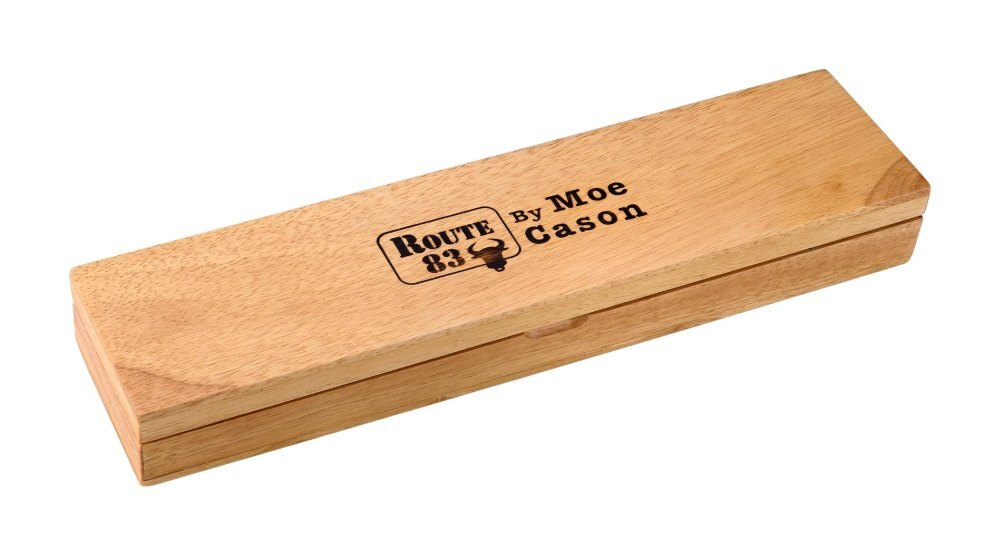
The XL Boning / Trimming Knife, XL Chef Knife and Meat Cleaver each come with a natural wood storage box. The Skinner with Gut Hook comes with a Kydex sheath and belt clip.
Are Route 83 knives dishwasher safe?
Not the wood-handled ones. Wash by hand with warm water and mild soap and dry right away, and rub the handles now and then with a 50/50 mix of olive oil and white vinegar.
Is there a Moe Cason brisket slicer?
Not in the collection we carry. For slicing cooked brisket, look at the Route 83 Classic Brisket 10" Carving Knife.
Where can I buy Moe Cason knives in Texas?
NTX BBQ Supply carries the full lineup above. Shop online or visit our store in downtown Denison.
See Moe Cason Knives in Person at NTX BBQ Supply

This whole collection is built around a handle that fits a big hand, and the only way to judge that is to hold one. Come by the shop and compare:
- Handle size: how the wider handle fills your hand
- Grip: olive wood vs. ebony vs. G10
- Weight: a 7-ounce boning knife next to a 3-pound cleaver
- Balance: where the weight sits when you hold it
- Blade style: curved trimmer, wide chef, cleaver or compact EDC
NTX BBQ Supply
327 W. Crawford St.
Downtown Denison, TX
903-207-8008 | Location & Hours
GET THE GOOD STUFF.
LATEST NEWS

PK Grills: The Story Behind an American BBQ Classic
Ribs on a PK Grill. Photo: PK Grills. BBQ gear changes constantly. Every season brings new controlle...

Small Batch, TX: Texas-Grown Flavor, Made in Small Batches
Homegrown Scotch bonnet peppers from Small Batch, TX, the heat behind their salsa and Caribbean jerk...

Majestic Outdoor Kitchens: American-Made Grill Islands Built Your Way
Most people start planning an outdoor kitchen with a grill in mind. What they end up needing is a sy...
Moe Cason Knives: The Complete Guide to Route 83 BBQ Knives
Walk up to any serious barbecue setup and you'll rarely find just one knife. There's a narrow blade...

Mastering Your Fusion Griddle: Cooking and Cleaning Techniques
Mastering Your Fusion Griddle: Cooking and Cleaning Techniques If you're new to cooking on a Fusion...

American Durability: Smokin Brothers Pellet Grills | Michael’s Outdoor Innovations Ep. #1
Welcome to the latest feature on Michael's Outdoor Innovations, proudly brought to you by NTX BBQ Su...