
PK Grills: The Story Behind an American BBQ Classic
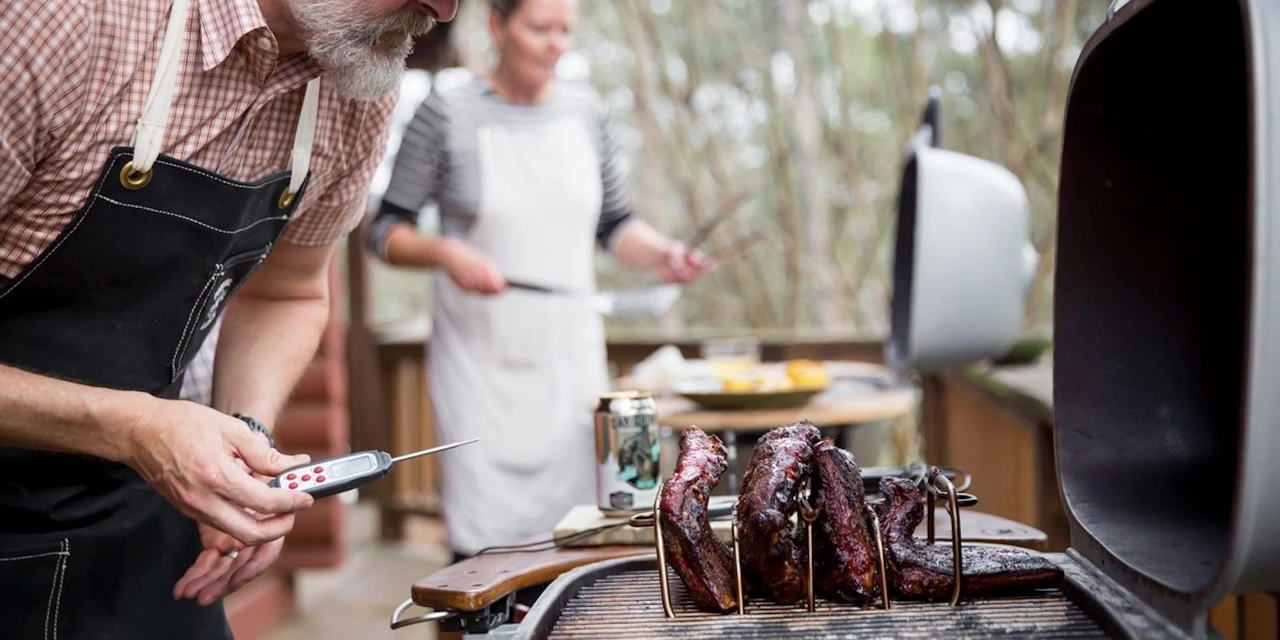
Ribs on a PK Grill. Photo: PK Grills.
BBQ gear changes constantly. Every season brings new controllers, new apps, new materials and new features. And then there's PK.
Since 1952, the basic idea behind the Portable Kitchen hasn't changed much: a thick cast-aluminum capsule, charcoal, and a simple set of vents that lets you grill hot and fast or smoke low and slow on the same cooker. That design was born in Tyler, Texas, and it has outlasted a lot of grills that were supposed to replace it.
We carry PK Grills at NTX BBQ Supply in Downtown Denison, and they're among the most distinctive grills on our floor. Here's the story behind them, what makes them cook differently from a typical kettle, and how to choose the right model.
The Story of PK Grills

An early Portable Kitchen in action, from NTX's original PK Grills campaign.
Born in Tyler, Texas (1952)
According to PK Grills, the first Portable Kitchen was created in Tyler, Texas, in 1952 by Hilton Meigs, an inventor and local businessman. His design combined a distinctive capsule shape, thick cast aluminum and a simple but effective venting system. It worked for hot-and-fast grilling and for low-and-slow barbecue.
Meigs sold his grills from the back of his station wagon across the mid-South. PK's history notes that he once sold 30,000 at a national hardware show and 20,000 to the U.S. Army.
The Arkansas years
In 1958, Meigs sold the business to Lewis W. Hamlin, who moved Portable Kitchens to Little Rock, Arkansas, a state with a ready supply of aluminum. The grills were displayed at the Brussels World's Fair, drew orders from as far away as Australia, Venezuela and Japan, and in 1970 alone, 8,800 cookers were reportedly shipped to Vietnam.
The long pause and the comeback
Then the market shifted. Through the 1970s, gas grills took over much of the backyard, and cheaper stamped-steel charcoal grills undercut the more expensive cast-aluminum design. Regal Ware bought the brand in 1984 and eventually stopped production. For nearly three decades, new PKs simply weren't made.
The grill never really disappeared, though. Vintage PKs kept cooking in backyards. Little Rock attorney Paul James found one at a garage sale, fired it up and discovered it still worked perfectly. He bought the brand's intellectual property, reconnected with Regal Ware (the same caster that poured the original cookers) and brought the PK Grill & Smoker back. In 2014, a new team joined to grow the company, and in late 2016 PK launched the PK360, its first new model in forty years.
Today, PK makes the PK Original from the original 1950s design alongside newer models introduced since 2017. One of its best-known fans is Aaron Franklin of Austin's Franklin Barbecue, whose input shaped the PK300AF Signature Edition. You can read the full story on PK Grills' official history page.
Why Cast Aluminum?
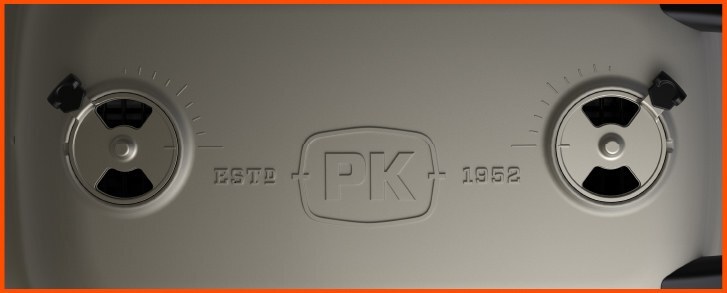
The cast-aluminum lid of a modern PK, still stamped "Estd 1952." Photo: PK Grills.
Most charcoal grills are made from thin stamped steel, usually with a porcelain-enamel coating. A PK cook chamber is cast aluminum: molten metal poured into a mold, which produces a thick, solid shell. That one material choice explains most of what makes a PK look, feel and cook differently.
- More even heat. Aluminum conducts heat far better than steel. PK puts it at about four times as conductive, so heat spreads through the capsule instead of concentrating in hot spots.
- It won't rust. Aluminum doesn't rust the way steel does. PK calls its cast-aluminum construction rust-proof and weatherproof, and notes that those claims apply to the cast-aluminum parts specifically.
- Durability. A thick casting holds its shape. PK says grills built before the moon landing are still cooking today, which is why so many vintage PKs get handed down rather than hauled off.
- Responsive temperature control. Because the capsule isn't a heavy, heat-soaking mass like a ceramic cooker, a PK responds relatively quickly when you adjust the vents or add fuel.
One practical tip: always build your fire on the charcoal grate. PK advises never placing charcoal directly on the cast-aluminum bottom of the grill.
The Shape Isn't Just for Looks
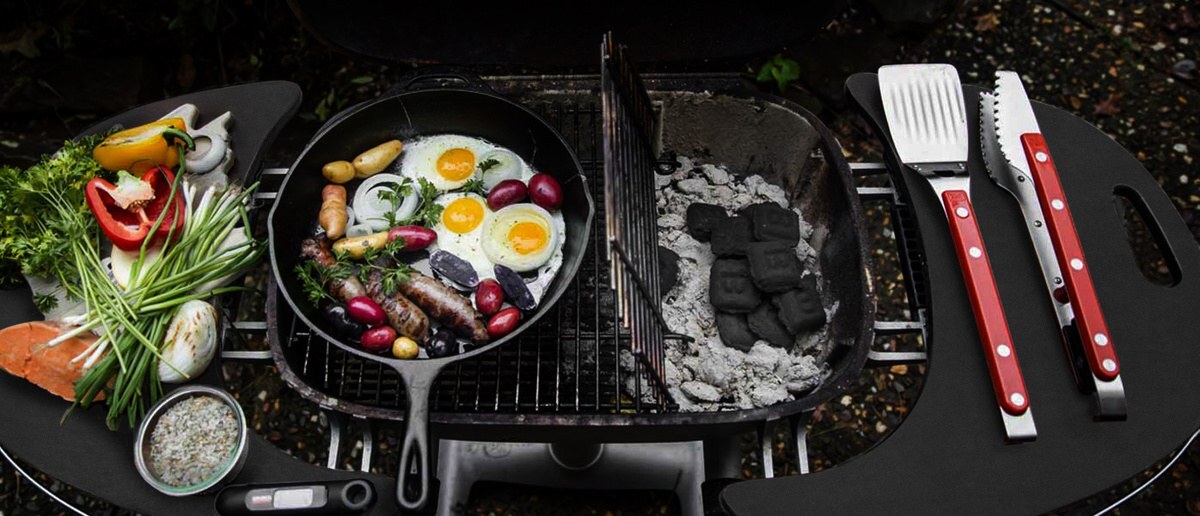
A PK set up for two zones: coals on one side, cooking on the other. Photo: PK Grills.
The PK's rounded, rectangular "capsule" is its signature, and it's functional. PK describes the shape as ideal for two-zone cooking. Pile the coals at one end and you have a hot side for searing and a genuinely cooler side for indirect cooking, with more usable space between them than you typically get from a round kettle.
- Direct cooking: spread the coals under the food for steaks, burgers and chops.
- Indirect cooking: bank the coals at one end and put the food at the other, so heat and smoke move across it like a convection oven.
- Smoking: the long, narrow chamber gives air and smoke a clear path from the fire, across the meat and out the far vent.
Even direct cooking happens with the lid closed on a PK. PK notes this surrounds the food with convection heat on all sides, not just radiant heat from below. A hinged cooking grid lets you add charcoal during a long cook without removing the food.
How the PK Vent System Works
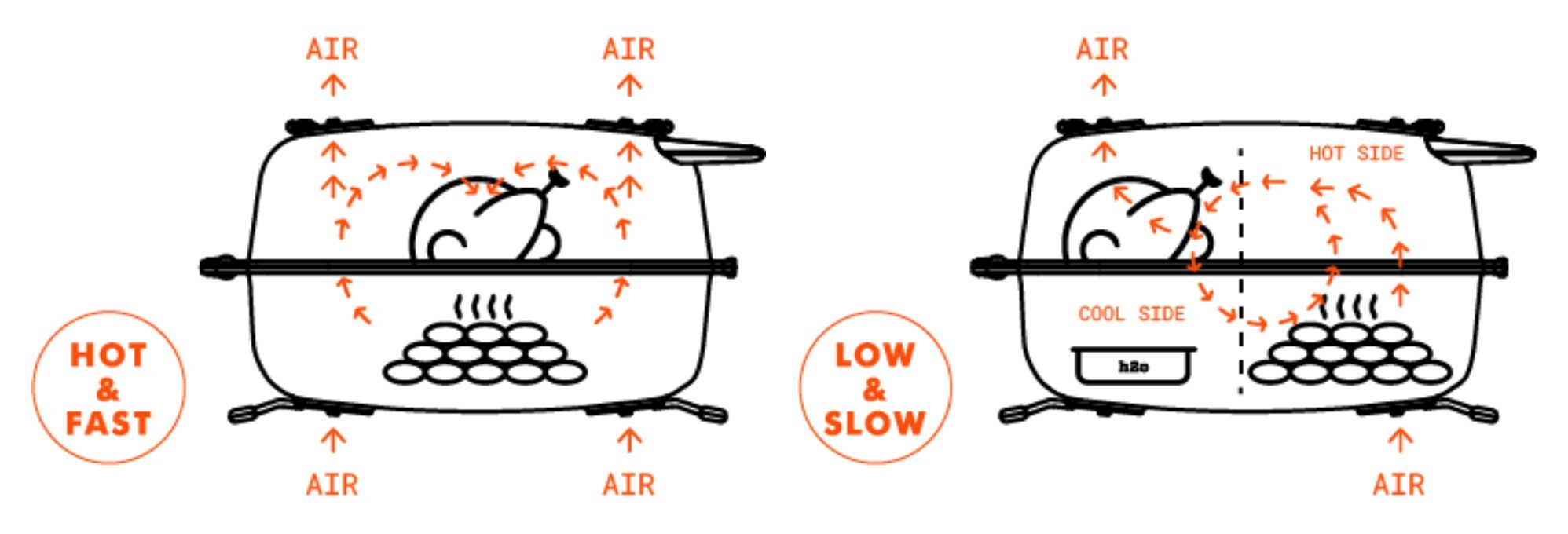
PK's airflow diagrams: hot and fast (left) and low and slow (right). Diagrams: PK Grills.
A typical charcoal grill has two vents, one on the bottom and one on the lid. A PK has four: two on the bottom of the capsule and two on the lid, one at each end. PK calls it the 4 Point Venting System. More vents means more control over where air enters, where it leaves and how it moves across your food.
The basic rule: open vents feed the fire more oxygen and raise the temperature. Closing them starves the fire and lowers it. PK's advice is that a little vent movement goes a long way, and closing all four vents puts the fire out completely.
Direct heat / hot and fast
Spread the coals under the cooking area and open all four vents. That's your setup for searing steaks, cooking burgers and charring vegetables. To bring the temperature down a little, close the vents slightly.
Indirect heat / low and slow
Bank the coals at one end and put the food at the other. Then, per PK's instructions:
- Bottom vents: open the one under the coals and close the one under the food.
- Top vents: close the one above the coals and open the one above the food.
That pulls air up through the hot coals, across the food and out the vent on the cool side, carrying heat and smoke over the meat. Fine-tune the temperature by nudging the vents slightly open or closed. The PK300 and PK360 use radial vents, and the PK300's hashmarks make those small adjustments easier to repeat.
Grill or Smoker? Both.
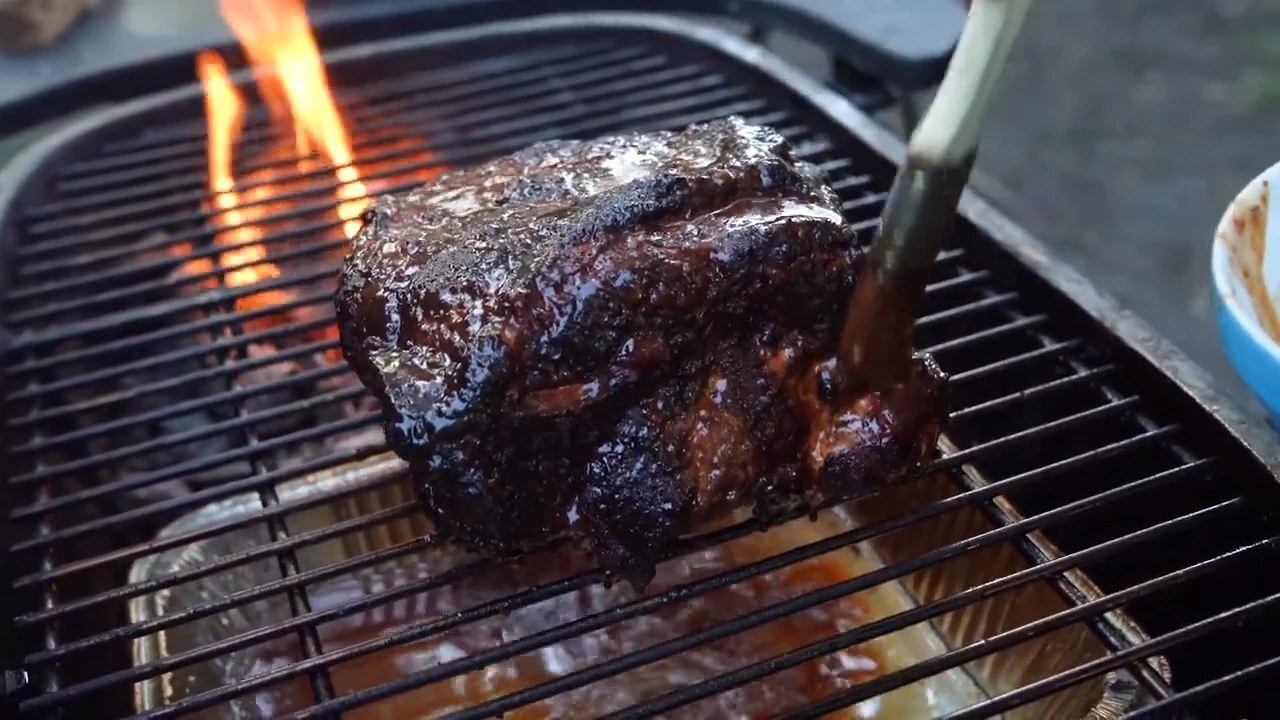
Pork shoulder on a PK. Photo: PK Grills.
The same PK that sears a steak on Tuesday can smoke a pork shoulder on Saturday. The only real difference is where you put the coals and how you set the vents.
Set it up for direct grilling when you're cooking:
- Steaks, chops and burgers
- Sausages, brats and hot dogs
- Vegetables and quick-cooking seafood
Set it up for indirect cooking and smoking when you're cooking:
- Whole chickens and bone-in chicken pieces
- Ribs and pork shoulder
- Brisket and other larger cuts
- Turkey (the PK360's larger capsule is designed with room for a whole bird)
Many cooks combine both: smoke a cut on the cool side, then move it over the coals for a final sear. For longer cooks, a water pan on the cool side and good charcoal make a difference. We carry lump charcoal, briquettes and fire starters in the store.
PK Grills at NTX BBQ Supply
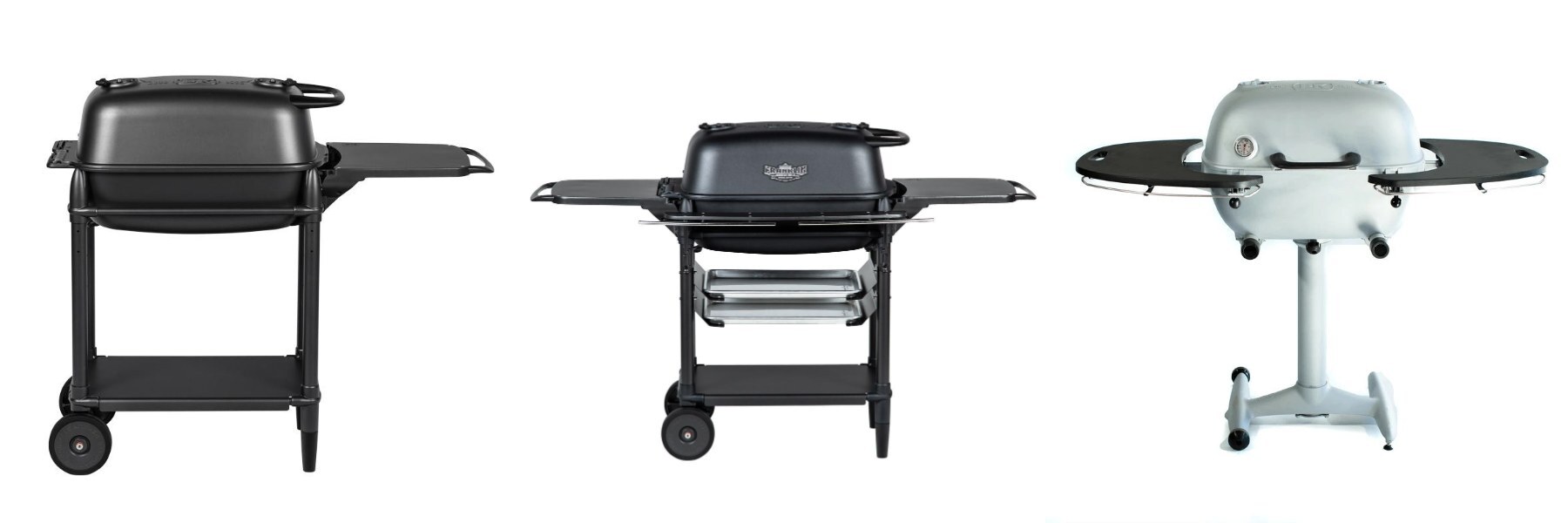
Our original PK email featured two grills: the PK300 Aaron Franklin Signature Edition and the PK360. Both are still on our site today, along with the standard PK300. Here's how they compare.
PK300: the "New Original"
PK calls the PK300 the New Original. It keeps everything that made the 1952 grill a classic, including the cast-aluminum capsule, four-point venting and direct/indirect versatility, and updates it with a working height about 3 inches taller, radial vents with hashmarks, a sturdier hinge, a wider lid seal, interior ash containment and more shelf space. Its cooking grid measures about 22.35 x 14.13 inches.
Best for: anyone who wants the classic PK experience in an updated, easier-to-use form.
Shop the PK300 (Graphite) · Shop the PK300 (Silver)
PK300AF: Aaron Franklin Signature Edition
Built on the PK300, the PK300AF adds the features Aaron Franklin wanted for cooking for a crowd: a belly bar, a second collapsible shelf and speed racks. We carry it in Coal.
Best for: cooks who want extra workspace and staging room, or who simply want the Franklin edition.
Shop the PK300AF (Coal)
PK360: the flagship
Launched in 2016, the PK360 is PK's largest model, with 360 square inches of cooking surface (versus 310 on the PK Original) and more headroom in the capsule. It uses radial vents, stands at a standard working height on its pedestal, and its capsule can be removed and used on a flat, non-flammable surface for tailgates and campsites.
Best for: bigger cooks, larger families and anyone who wants the most room and versatility.
Shop the PK360 (Silver) · Shop the PK360 (Graphite)
| Model | Best for | Key features | Colors at NTX |
|---|---|---|---|
| PK300 | The classic PK experience, updated | Radial vents, taller working height, ash containment | Graphite, Silver |
| PK300AF | Extra workspace and staging | Belly bar, second shelf, speed racks | Coal |
| PK360 | Maximum cooking space | 360 sq. in., pedestal stand, removable capsule | Silver, Graphite |
PK's wider lineup also includes the PK Original, PKTX and the portable PKGO family. Ask us if you're interested in a model you don't see on our site.
Which PK Grill Is Right for You?
- The classic backyard PK experience → PK300
- More shelf space for cooking for a crowd → PK300AF Aaron Franklin Signature Edition
- The most cooking room, or a whole turkey → PK360
- A grill you can also take to the tailgate → PK360, since its capsule can come off the pedestal
Whichever you choose, add a PK Heavy Duty Charcoal Basket to keep your coals contained, and browse our tools and accessories for tongs, gloves and thermometers.
Why Has the Design Lasted So Long?
Some products survive by constantly adding features. Others survive because the original idea was right.
The PK is the second kind. Cast aluminum that spreads heat evenly and doesn't rust. A capsule built for two-zone cooking. Four vents that let you steer airflow instead of guessing. And charcoal, which still delivers the flavor that drew people to outdoor cooking in the first place. None of those ideas has gone out of date.
That's why PK built its comeback on the original grill, why vintage PKs still turn up at garage sales and get put right back to work, and why the brand has kept a following among backyard cooks and competition pitmasters alike. The newer models refine the details: taller stands, easier vents, better ash control. The core concept from 1952 is still doing the work.
Come See PK Grills at NTX
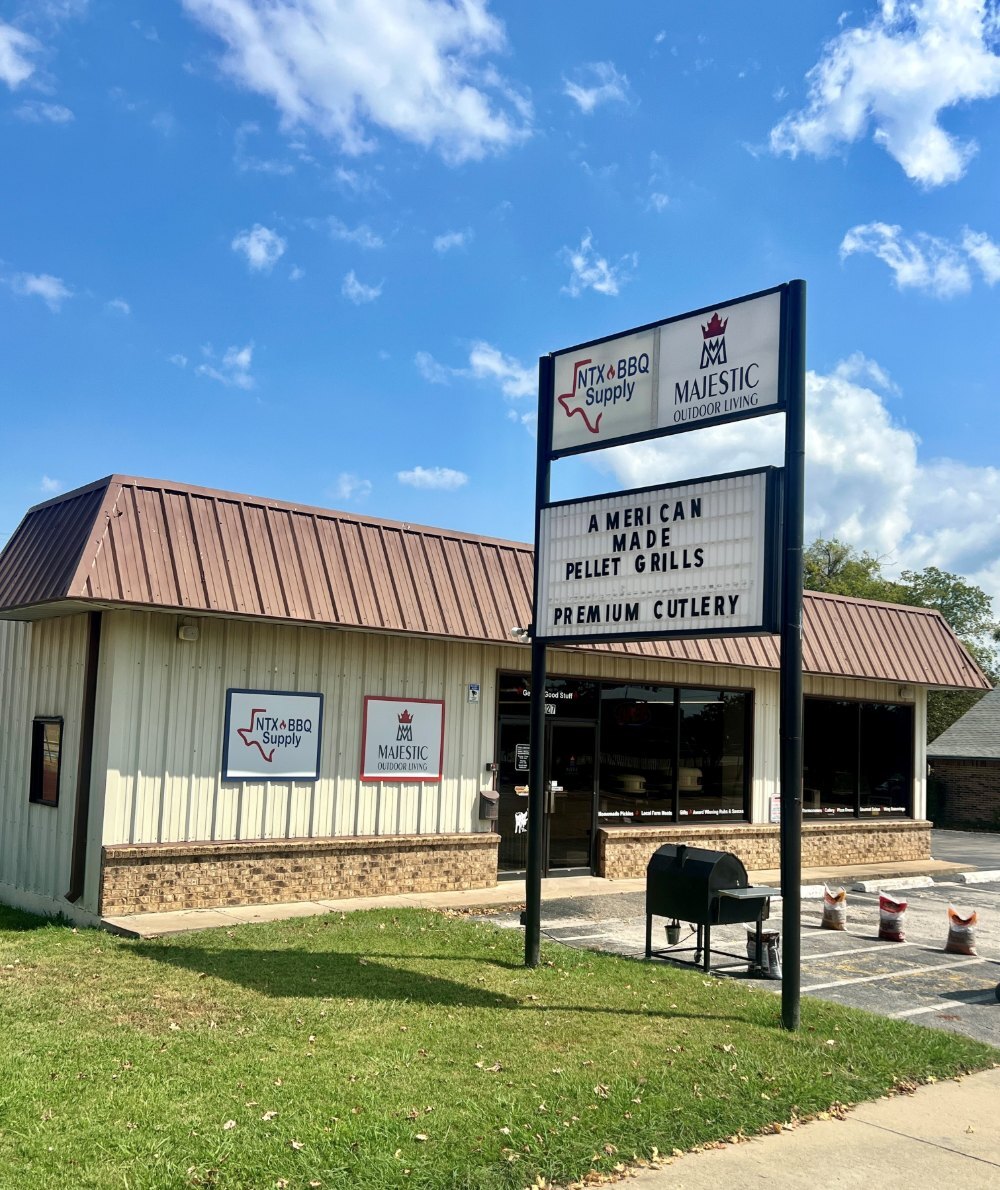
The best way to understand a PK is to put your hands on one. Lift the lid, feel the weight of the casting and see how the vents work. Stop in to see which PK models and accessories are currently on our floor, along with the rest of our charcoal, pellet and outdoor cooking gear.
NTX BBQ Supply
327 W. Crawford St.
Downtown Denison, TX 75020
Get the good stuff.
LATEST NEWS

PK Grills: The Story Behind an American BBQ Classic
Ribs on a PK Grill. Photo: PK Grills. BBQ gear changes constantly. Every season brings new controlle...

Small Batch, TX: Texas-Grown Flavor, Made in Small Batches
Homegrown Scotch bonnet peppers from Small Batch, TX, the heat behind their salsa and Caribbean jerk...
Majestic Outdoor Kitchens: American-Made Grill Islands Built Your Way
Most people start planning an outdoor kitchen with a grill in mind. What they end up needing is a sy...

Moe Cason Knives: The Complete Guide to Route 83 BBQ Knives
Walk up to any serious barbecue setup and you'll rarely find just one knife. There's a narrow blade...
Mastering Your Fusion Griddle: Cooking and Cleaning Techniques
Mastering Your Fusion Griddle: Cooking and Cleaning Techniques If you're new to cooking on a Fusion...

American Durability: Smokin Brothers Pellet Grills | Michael’s Outdoor Innovations Ep. #1
Welcome to the latest feature on Michael's Outdoor Innovations, proudly brought to you by NTX BBQ Su...