

How to Smoke a Thanksgiving Turkey: The NTX Turkey Game Plan
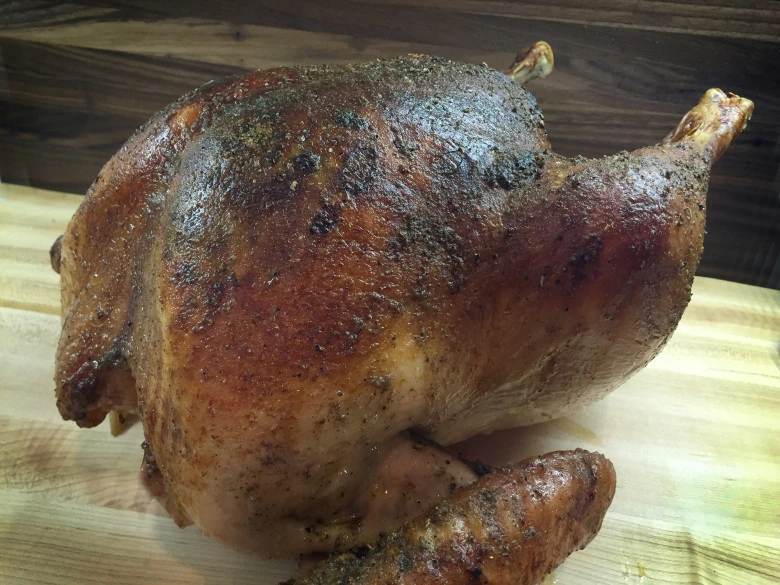
Everybody remembers the turkey. Pull a juicy bird with crisp, mahogany skin and a kiss of smoke off the pit and you're the hero of Thanksgiving. Serve a dry one and the dinner table gets real quiet.
The good news: a great smoked turkey isn't luck. It's a plan. This is the NTX Thanksgiving Turkey Game Plan, and it takes you from the grocery store to the carving board: thawing, prep, brining, seasoning, smoke, temperature, resting and carving. Along the way we'll point out the rubs, pellets, thermometers and knives on our shelves in Downtown Denison that make each step easier.
In this guide:
- The Thanksgiving turkey timeline
- Whole turkey or spatchcock?
- Wet brine vs. dry brine
- Build the flavor
- Best wood and pellets for turkey
- What temperature to smoke a turkey
- Thermometers and where to probe
- How to get better skin
- The knives you'll actually use
- How to carve a turkey
- The NTX turkey checklist
- Turkey FAQ
The Thanksgiving Turkey Timeline
Most turkey problems start days before the fire is lit. Work backward from dinner time and Thursday gets a lot calmer.
| When | What to do |
|---|---|
| Several days out (see thaw table below) |
Move a frozen turkey to the refrigerator to thaw. Buy your rub, brine, pellets or charcoal now, not Wednesday night. |
| 1–2 days out | Brine or dry brine (if you're doing either) in the refrigerator. Spatchcock now if that's your plan. |
| The night before | Clean the grill and empty the grease tray. Fill the hopper or set out charcoal. Test your thermometer and sharpen your knives. Leave the bird uncovered in the fridge if you want drier, crispier skin. |
| Thanksgiving morning | Fire up the cooker and let it stabilize. Pat the turkey dry, inject and season, then get it on the grill. Build in a time cushion. |
| Before dinner | Cook until your thermometer says it's done (165°F in the right spots, more on that below). Rest about 20 minutes, then carve. |
How long does a frozen turkey take to thaw?
Thaw in the refrigerator, in cold water, or in the microwave. Never on the counter or in hot water. In the refrigerator, USDA says to allow roughly 24 hours for every 4 to 5 pounds:
| Turkey size | Refrigerator (40°F or below) | Cold water* |
|---|---|---|
| 4–12 lb | 1–3 days | 2–6 hours |
| 12–16 lb | 3–4 days | 6–8 hours |
| 16–20 lb | 4–5 days | 8–10 hours |
| 20–24 lb | 5–6 days | 10–12 hours |
*Cold water: keep the turkey in a leak-proof bag, submerge it in cold tap water, change the water every 30 minutes, and cook it immediately once thawed. A refrigerator-thawed turkey can wait in the fridge another 1–2 days before cooking. Source: USDA FSIS.
Food safety rules vs. BBQ preferences
A lot of this guide is technique, and there's room for opinion. These parts aren't up for debate:
- Cooked turkey must reach 165°F in the thickest part of the breast and the innermost part of the thigh and wing (USDA).
- Thaw and brine in the refrigerator. Throw out used brine.
- USDA doesn't recommend washing raw poultry. It just splashes bacteria around the sink. Keep raw turkey, its juices and its cutting board away from ready-to-eat food, and wash your hands and tools.
- Don't stuff a turkey you're smoking. Cook the dressing in a pan.
- Refrigerate leftovers within 2 hours.
Whole Turkey or Spatchcock?
Whole turkey
The Norman Rockwell bird. If you're carving at the table, nothing beats it. The tradeoff is that the breast and the legs finish at different times, the cavity slows things down, and a big bird spends a long time on the pit. Tip from our original smoked turkey tips: turn the thighs toward the hotter side of your cooker so the dark meat keeps pace with the breast.
Spatchcock (butterflied) turkey
Cut out the backbone, flip the bird and press it flat. Everything sits at about the same height, so it cooks more evenly and usually faster. And nearly all of the skin faces the heat, which means more crisp skin and more smoke. The downsides: it doesn't look like a classic holiday bird, and it needs a wide cooking surface.
| Whole | Spatchcock | |
|---|---|---|
| Presentation | Classic, carve at the table | Rustic, carve in the kitchen |
| Cook evenness | Breast can finish before thighs | More even |
| Skin | Underside stays soft | Nearly all skin exposed |
| Grill space | Needs height | Needs width |
To spatchcock, cut along both sides of the backbone with sturdy poultry shears, open the bird and press firmly on the breastbone to flatten it. A nimble boning knife like the Moe Cason XL Boning Trimming Knife is handy afterward for trimming loose skin and fat. Save the backbone for gravy stock.
Wet Brine vs. Dry Brine
Salt changes turkey. According to USDA, salt dissolves some of the muscle protein, which helps the meat hold onto moisture during cooking. You've got three good routes.
First, check the label. If it says "self-basting," "enhanced," "kosher," or lists a solution added, the bird is already salted. Brining it again can make it too salty. Skip the brine and go straight to seasoning or injecting.
Wet brine
The turkey soaks completely submerged in salt water (often with sugar and aromatics), covered, in the refrigerator. Overnight is the minimum for good results, and USDA says no more than 2 days. Wet brining gives very juicy meat, but it takes refrigerator or cooler space, and the skin comes out wet. Dry the bird well before smoking. Throw the brine away afterward.

The easy button. Two seasoning packets, a heavy-duty resealable brine bag and instructions. Savory and herby with a touch of sweetness and mild black pepper. Enough for one extra-large turkey or two smaller birds.
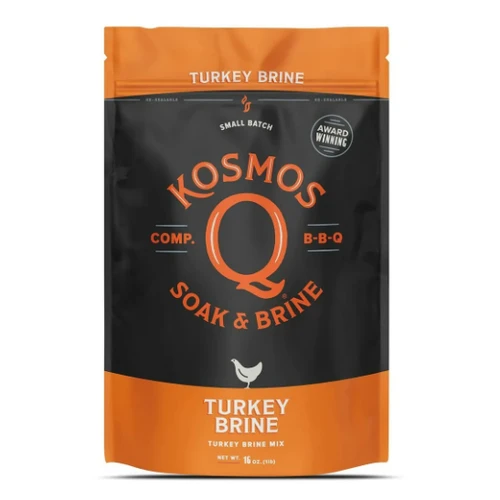
A 16 oz turkey brine mix from Kosmo's Q, made to pack poultry with moisture and flavor. Follow the mixing directions on the bag and you're set.
Dry brine
Salt the turkey all over (under the breast skin too), then let it sit in the refrigerator, usually a day or two. USDA describes the process: the salt draws moisture out, it turns into a brine on the surface, and the meat reabsorbs it without any added water. No bucket needed. And because the skin dries out in the fridge, dry brining is the better route if crisp skin is your top priority. A large lidded prep tub like the Drip EZ XL Prep Tub (22.5" x 16.25") is roomy enough for a spatchcocked turkey or turkey parts in the fridge.
No brine: inject instead
Short on time or fridge space? An injection puts flavor and moisture deep in the breast, where a rub can't reach. It's also the move for a pre-brined bird. See the injection picks below.
Build the Flavor
Turkey is a blank canvas, and a pretty bland one. Use a poultry-friendly rub on the skin and under it, and if you like, add an injection for the breast. Go easy on the rub if you brined, because both bring salt. Here's what we reach for:

NTX PICK: INJECT + SEASON
Texas Turkey Kit: Garlic Butter Injection & Gourmet Seasoning
Our favorite one-box answer. It pairs John Henry's Turkey and Meat Injection with Garlic Butter and John Henry's Grand Champion seasoning. Inject the breast and thighs in several spots so the flavor spreads evenly, then season the outside. Want the injection by itself? Grab the John Henry's Turkey and Meat Injection w/Garlic Butter. It works for injecting, basting and marinating.
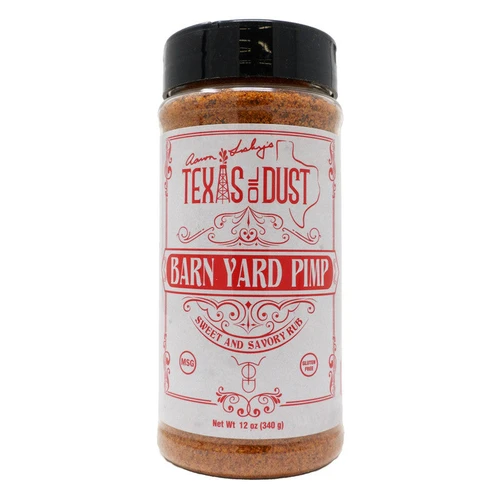
Texas Oil Dust Barnyard Pimp Chicken Rub
Flavor: salty-sweet with a touch of heat. Why it works: a competition-proven poultry rub that's built for good color on whole birds.
John Henry's Texas Chicken Tickler
Flavor: herb and garlic pepper. Why it works: a savory, classic "Thanksgiving" profile. A former Houston Livestock Show & Rodeo grand champion rub.
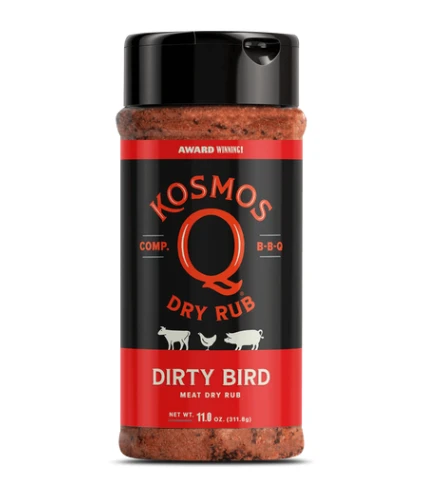
Flavor: red-pepper kick with brown-sugar sweetness. Why it works: made for poultry. Because of the sugar, watch your temps late in a hot cook so it doesn't scorch.
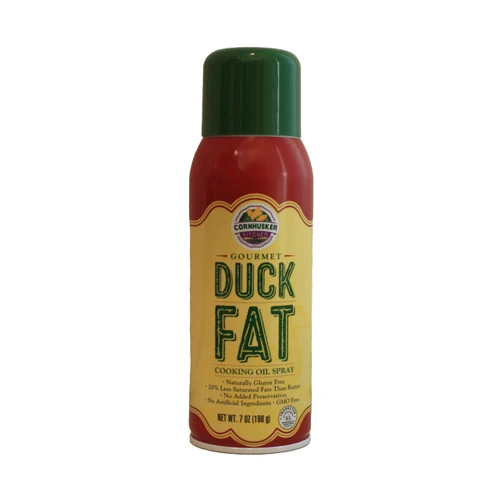
Cornhusker Kitchen Duck Fat Cooking Oil Spray
The binder that pulls double duty. A light coat of fat on dry skin helps the rub stick and helps the skin brown and crisp. (Melted butter works too. Our original turkey tips swear by compound butter under the breast skin.)
Watch: NTX brines, injects and seasons a turkey
See the steps in under a minute from the NTX crew:
What Wood or Pellets Should You Use for Turkey?
Poultry soaks up smoke fast, and turkey skin can go from "beautiful" to "ashtray" if you overdo it. There's no single best wood. It comes down to how much smoke you want:
| Wood | Profile | Best for |
|---|---|---|
| Cherry | Light, sweet, rosy color | Beautiful mahogany skin |
| Apple | Sweet, fruity | Crowd-pleasing, mild smoke |
| Pecan | Medium, nutty, milder than hickory | A true Texas middle ground |
| Hickory | Strong, bacon-like | Bold smoke lovers. Use it in moderation or blend it with fruitwood |
Lighter and sweeter is the safest bet for a crowd. Want more smoke? Go pecan, or mix in some hickory. All of these are on our shelf from BBQr's Delight, whose flavor wood is blended with oak for a clean, steady fire in your pellet grill:
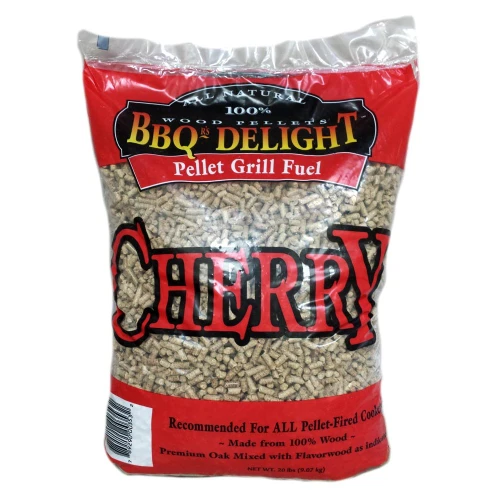
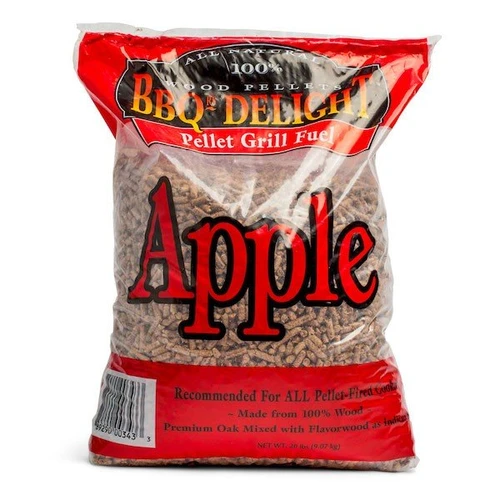
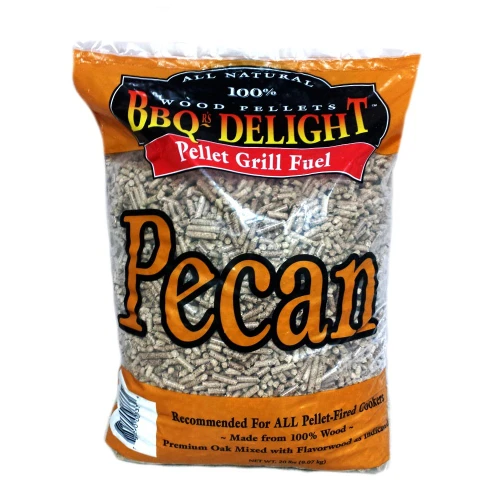
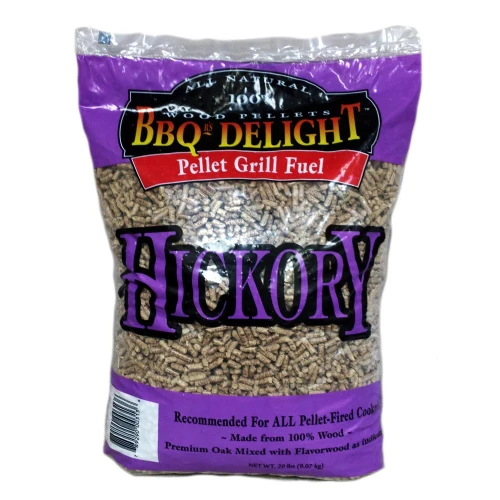
Cooking on charcoal? FOGO Premium Lump Charcoal (local pickup at the store) gives you a hot, clean-burning base. Set up two zones so the turkey cooks over indirect heat with a drip pan underneath, the way USDA's grilling and smoking guidance calls for. A cast-aluminum charcoal cooker like the PK360 Grill & Smoker is built for exactly that kind of two-zone cook. On a pellet grill like the Green Mountain Grills Ledge Prime 2.0 or a Smokin Brothers Premier Plus, just set the temp and manage your smoke with your pellet choice. Make sure you've got enough fuel for the whole cook, plus extra.
What Temperature Should You Smoke a Turkey At?
This is where turkey parts ways with brisket. A brisket wants low and slow for hours to break down connective tissue. Turkey doesn't have that problem, and at very low temperatures the skin turns out rubbery.
- Lower (around 225–250°F): more smoke flavor, longer cook, softer skin.
- Higher (around 300–325°F+): shorter cook, better rendered, crispier skin, a little less smoke.
Our original turkey tips put the sweet spot at 275–325°F: 275°F for more smoke, 325°F for crispier skin. Plenty of pitmasters split the difference: run lower early for smoke, then turn it up to finish the skin. For reference, USDA's smoking guidance calls for keeping smoker air at 225–300°F with a drip pan. It lists 8–12 lb turkeys at roughly 20–30 minutes per pound in that range. Got a bigger bird? Spatchcock it so it cooks faster and more evenly.
Whatever your smoker reads, the turkey is done when the thermometer says so, not the clock. Weather, wind, lid-opening, bird size and how full your cooker is all change the timing. Use time estimates to plan your morning. Use internal temperature to decide when it comes off.
Don't Guess the Temperature
Thanksgiving isn't the day to find out your thermometer quit working. Check the batteries the night before. A quick ice-water test should read close to 32°F.
Where to check a turkey's temperature
USDA: 165°F, measured in three places:
- The thickest part of the breast
- The innermost part of the thigh
- The innermost part of the wing
Keep the probe off the bone, which gives a false reading. Check more than one spot. The lowest reading is the one that counts. Technique note: some cooks pull a few degrees early and let carryover heat finish the job. If you do, confirm the turkey actually reaches 165°F before you serve it.
FAST SPOT CHECKS
Maverick PT-75 Temp & Time Instant Read
A fast thermocouple that reads in about 2–3 seconds, so the lid isn't open long. Ideal for checking all three spots.
SIMPLE & AFFORDABLE
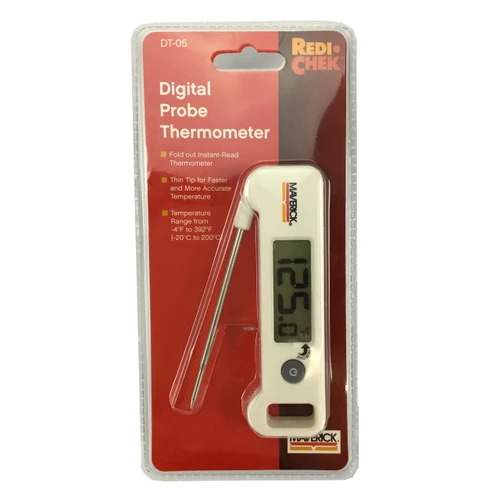
Maverick Digital Probe Thermometer DT-05C
A pocket-size digital probe that reads in under 4 seconds. A great backup or a stocking stuffer for the cook in the family.
LEAVE-IN + WIRELESS
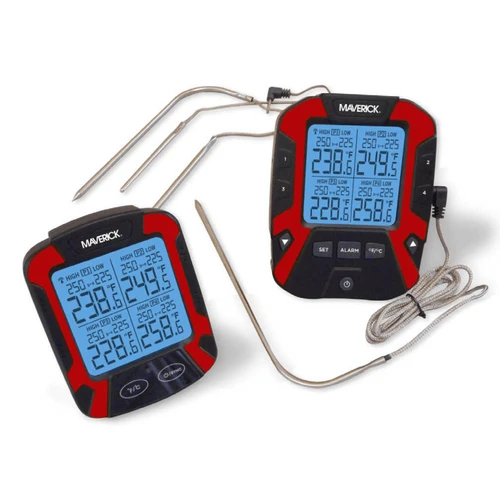
Maverick XR-50 Extended Range Wireless
Four probes and alerts up to 500 feet away. Put probes in the breast and thigh plus one for pit temp, then go watch the game.
How to Get Better Turkey Skin
Rubbery skin is the most common smoked-turkey complaint. Skin needs dryness, fat and heat:
- Start dry. Pat the bird thoroughly dry with paper towels. Leave it uncovered in the fridge overnight if you have room. A dry brine does this for you.
- If you wet brined, dry it extra well. A wet brine leaves the skin waterlogged.
- Add a little fat. A light coat of duck fat spray, oil or butter helps the skin brown.
- Finish hot. Running 300–325°F or higher, at least for the last stretch, renders the fat under the skin.
- Let air move. Set the bird on a rack so heat and smoke reach all sides. Don't wrap it in foil, and keep the lid closed.
- Skip the late spritz. Mopping or spritzing near the end puts moisture right back on the skin.
- Sugar goes last. If you glaze, brush it on in the final minutes so it doesn't burn.
Rest Before You Carve
Don't cut into it the second it comes off the pit. USDA recommends letting a whole turkey stand about 20 minutes before carving so the juices set. It'll carve more easily, too. Tent it loosely with foil if you like. Wrapping it tight will steam the skin you worked so hard for.
The Knives You'll Actually Use
You've spent days on this bird. Don't finish the job hacking at it with a dull steak knife. Thanksgiving really calls for three blades, and each has a different job:

JOB 1: PREP
Messermeister Meridian Elite 8" Chef's Knife
The workhorse for herbs, onions, celery, citrus and everything going into your brine, butter and sides. An 8" chef's knife handles most of the slicing, chopping and mincing in a holiday kitchen, so it's the one knife you'll pick up all week.
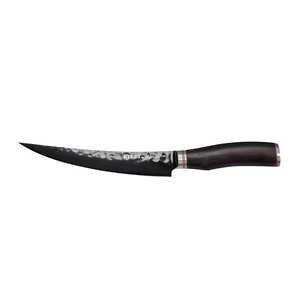
JOB 2: TRIM & BREAK DOWN
Moe Cason XL Boning Trimming Knife (Ebony)
A narrow, maneuverable German-steel blade with a titanium coating that slips between skin and meat. Use it to trim excess skin and fat, tidy a spatchcocked bird, and work around joints when you take off the legs and wings. Designed with competition pitmaster Moe Cason. Read our Moe Cason knife guide.

JOB 3: CARVE & SLICE
Messermeister Meridian Elite 10" Round-Tip Kullens Slicer
This is why a slicer beats "whatever's in the drawer." A long 10" blade cuts a breast in one smooth stroke instead of sawing back and forth, which shreds the meat and tears the skin. The hollow-ground kullens reduce sticking, and the rounded tip keeps things safe on a crowded counter. Value pick: the Lasting Cut 10" Forged Roast / Brisket Slicer, German stainless and NSF certified, is built for turkey and brisket.
Give the bird room on a big board with a juice groove, like the Acacia XL 16" x 13" Cutting Board, and use a separate board for raw prep.
How to Carve a Turkey
- Legs and thighs first. Slice through the skin between the breast and leg, then pull the leg out and away until the hip joint pops. Cut through the joint with your boning knife.
- Separate drumstick and thigh. Find the joint between them and cut straight through. Slice the thigh meat off the bone.
- Remove each breast whole. Run your knife down one side of the breastbone, then follow the rib cage down and out to lift off the whole breast half. Repeat on the other side.
- Slice across the grain. Lay the breast on the board and use your slicer to cut ½-inch slices against the grain, with long, even strokes. Each slice keeps a strip of skin.
- Wings last. Pull each wing away from the body and cut through the joint.
- Platter it. White meat on one side, dark on the other, drumsticks and wings for the folks who fight over them.
The NTX Thanksgiving Turkey Checklist
THE BIRD
☐ Turkey (thaw date on the calendar)
☐ Container for the fridge
FLAVOR
☐ Brine (if using)
☐ Poultry rub
☐ Injection + injector (if using)
☐ Duck fat spray or butter
TEMPERATURE
☐ Reliable thermometer
☐ Fresh batteries
☐ 165°F in breast, thigh and wing
PREP
☐ Separate raw-meat cutting board
☐ Chef's knife
☐ Paper towels and food-safe gloves
☐ Heat-resistant grill mitts
FINISH
☐ Slicing knife
☐ Carving board
☐ Serving platter
☐ Containers for leftovers
Common Thanksgiving Turkey Mistakes
- Thawing too late. A 20-lb bird needs 4–5 days in the fridge. Do the math this weekend.
- Not leaving a time cushion. Start early. A done turkey can rest while you finish the sides, but a late turkey holds up dinner.
- Cooking by the clock. Minutes-per-pound is for planning. The thermometer decides when it's done.
- Checking one spot. Check the breast, thigh and wing, and keep the probe off the bone.
- Heavy smoke. Turkey takes smoke fast. Start light with fruitwood or pecan.
- Brining a pre-brined bird. Read the label first.
- Wet skin, low heat. That's the recipe for rubbery skin. Dry it and finish hot.
- Glazing too early. Sugar burns. Sauce it in the last few minutes.
- Carving right away. Give it about 20 minutes.
- Using the wrong knife. A long, sharp slicer gives you clean slices with the skin on.
Build Your Thanksgiving Turkey Kit
This isn't a bundle, just a shopping list based on what's on our shelves right now.
The Essentials
- Texas Turkey Kit (injection + seasoning)
- BBQr's Delight Cherry or Apple pellets
- Maverick PT-75 instant-read thermometer
- Lasting Cut 10" slicer
Rounding out the menu? Put the smoker to work on sides and dessert too: try our smoked cheesy potato casserole and smoked bourbon pecan pie.
Thanksgiving Turkey FAQ
How long does it take to smoke a turkey?
It depends on the bird's size, your smoker temperature, the weather, and whether it's whole or spatchcocked. USDA's smoking guidance lists about 20–30 minutes per pound for 8–12 lb turkeys at 225–300°F. Hotter cooks go faster. Use that to plan your timeline, and pull the turkey when it reaches 165°F, not when the timer goes off.
What temperature should I smoke a turkey at?
Most backyard cooks land between 275°F and 325°F. Lower gives more smoke, and higher gives crispier skin. Some start lower for smoke and finish hotter for the skin.
What internal temperature should turkey reach?
165°F, measured in the thickest part of the breast and the innermost part of the thigh and wing, without touching bone (USDA).
What's the best wood for smoked turkey?
Fruitwoods like cherry and apple are mild and sweet, and cherry gives great color. Pecan is a nutty middle ground. Use hickory in moderation or blended. Turkey takes on smoke quickly, so start lighter.
Should I brine a turkey before smoking?
Brining (wet or dry) helps the meat hold moisture and seasons it throughout. It's optional. Don't brine a turkey labeled self-basting, enhanced or kosher, which is already salted. Injecting is a great alternative.
Is dry brining or wet brining better?
Both work. Wet brining makes very juicy meat but takes space, and the skin needs extra drying. Dry brining takes less space and gives drier skin that crisps better. Either way, brine in the refrigerator.
Should I spatchcock my Thanksgiving turkey?
If you care more about even cooking, crisp skin and speed than about a classic table presentation, yes. It's also a smart move for larger birds.
How do you get crispy skin on smoked turkey?
Dry the skin well (an uncovered night in the fridge helps), add a little fat, cook at 300–325°F or higher for at least the end of the cook, and skip spritzing near the finish.
What knife is best for carving turkey?
A long slicing knife, about 10", with a sharp edge. It cuts the breast in clean strokes without tearing. A boning knife helps you take off the legs and wings at the joints.
How long should turkey rest before carving?
USDA recommends about 20 minutes so the juices set and the turkey carves more easily.
Get Thanksgiving Ready at NTX
Not sure which rub, pellet or thermometer fits your setup? Stop by and talk turkey with us. We'll help you pick seasonings, brines, injections, pellets and charcoal, thermometers, knives, BBQ tools, and the grills and smokers to cook it all on.
NTX BBQ Supply
327 W. Crawford St.
Downtown Denison, TX 75020
Call or text: 903-207-8008
Shop Rubs & Seasonings Plan Your Visit
Get the Good Stuff!
LATEST NEWS
How to Smoke a Thanksgiving Turkey: The NTX Turkey Game Plan
Everybody remembers the turkey. Pull a juicy bird with crisp, mahogany skin and a kiss of smoke off...
Professional Grill Cleaning in North Texas: Gas, Pellet & Outdoor Kitchens
Before and after a professional cleaning. Photo: NTX BBQ Supply. Most grills don't get dirty all at...
PK Grills: The Story Behind an American BBQ Classic
Ribs on a PK Grill. Photo: PK Grills. BBQ gear changes constantly. Every season brings new controlle...
Small Batch, TX: Texas-Grown Flavor, Made in Small Batches
Homegrown Scotch bonnet peppers from Small Batch, TX, the heat behind their salsa and Caribbean jerk...
Majestic Outdoor Kitchens: American-Made Grill Islands Built Your Way
Most people start planning an outdoor kitchen with a grill in mind. What they end up needing is a sy...
Moe Cason Knives: The Complete Guide to Route 83 BBQ Knives
Walk up to any serious barbecue setup and you'll rarely find just one knife. There's a narrow blade...